
How Often Does a Septic Tank Need Cleaning?
The honest answer: it depends on your tank and your household, but 3 to 5 years is the standard window most homeowners fall into. A family of five running a smaller tank might need service closer to the 3 year mark, and if you're weighing the numbers, septic tank pumping cost breakdowns help put the interval in perspective. A couple in a house with a larger tank could stretch toward 5. Tank size and household size drive the interval more than anything else, so there's no single number that fits every home in Saint Clair Shores.
If you've never had the tank pumped and you're not sure how old the system is, don't guess. A septic tank pumping cost estimate from a real inspection tells you more than a calendar ever will. Waiting too long risks solids backing into the drain field, which turns a routine pump job into a much bigger repair. Homeowners near Roseville, about 3.8 miles northwest, and Eastpointe, roughly 4.3 miles southwest, deal with the same clay-heavy soil conditions that make drain field damage expensive to fix once it starts.
What Are the Warning Signs My Septic Tank Is Full?
Slow drains, gurgling pipes, standing water near the tank, and a sewage smell in the yard are the clearest signs your tank needs attention now, not next month. These symptoms often show up faster than the calendar suggests, especially after heavy rain or a run of house guests, and the septic pumping service page covers what a technician actually checks first.
If you notice any of these, don't wait for your scheduled interval. Check septic tank warning signs for a fuller list, and if the situation looks urgent, emergency septic service can get someone out before a slow drain becomes a flooded yard. A tank that's overdue for pumping puts stress on the whole system, and once solids reach the drain field, you're looking at a repair bill instead of a maintenance bill.
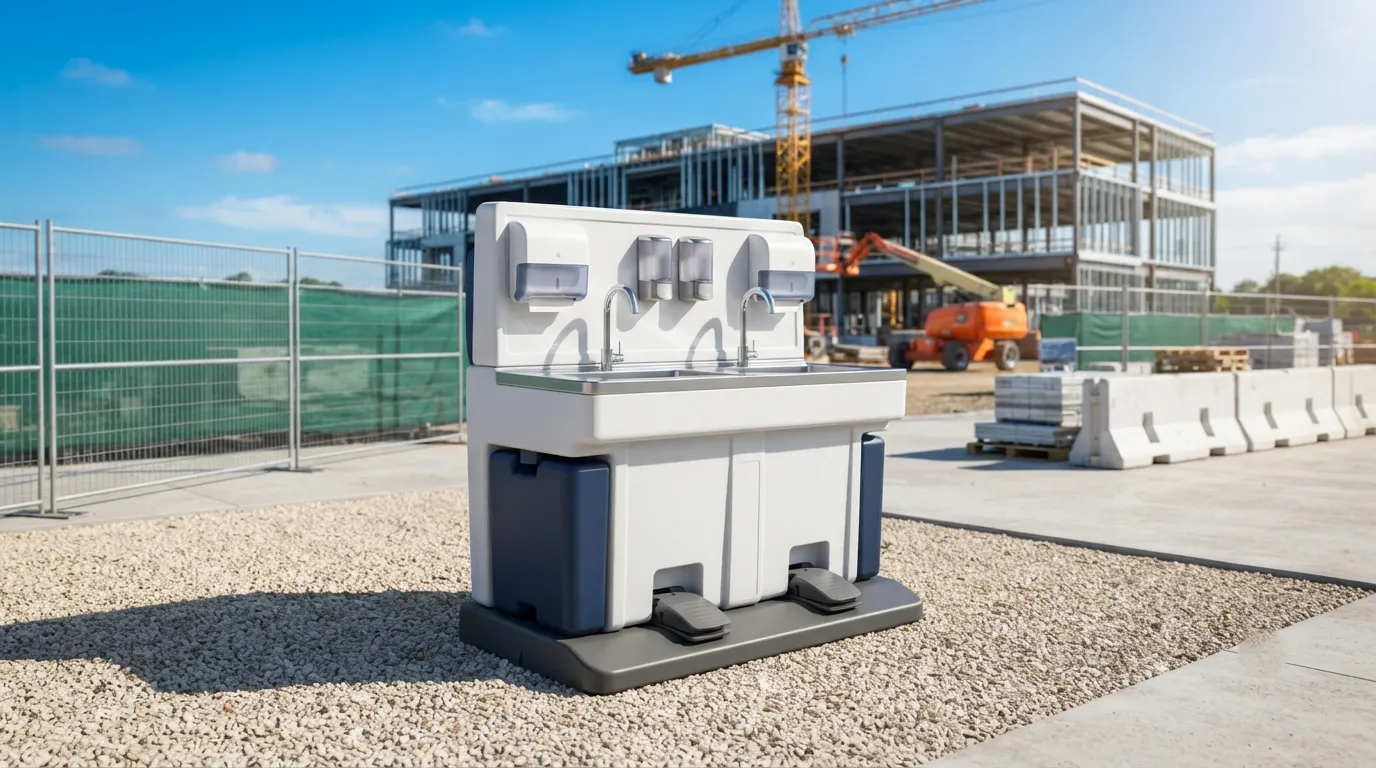
Commercial kitchens have their own version of this problem. A grease interceptor gets pumped once fats, oils, grease and solids reach 25 percent of the liquid depth, which happens a lot faster than most restaurant owners expect. If that's your situation, grease trap pumping runs on a different schedule than a residential tank entirely, and a portable handwashing station rental can keep staff compliant while the interceptor gets serviced.
What Affects Septic Tank Pumping Frequency?
Tank size and the number of people in the house are the two biggest factors, and they interact. A large tank serving two people can go years longer between pumpings than a small tank serving six. Water usage matters too. Long showers, frequent laundry loads, and garbage disposal use all add volume that fills a tank faster than average, similar to how a busy portable restroom rental fills faster than a lightly used one.
Soil type plays a role in Saint Clair Shores specifically. Poor drainage in the drain field means a tank that seems fine on the surface can already be backing up underground. If you're building new or replacing an old system, holding tank rental is worth considering as a temporary fix while work gets done. And if you're not sure what size tank you're dealing with, a service visit answers that faster than trying to measure it yourself, the same way a how many porta potties do I need call sorts out unit counts for a work crew.
For context, ANSI/PSAI Z4.3 sets a baseline service interval of once per week for portable sanitation units seeing up to 10 users over a 40 hour week. Septic tanks aren't portable toilets, but the same logic applies: usage volume, not the calendar alone, should set your schedule. A house with heavy usage needs more frequent checks than the 3 to 5 year average suggests.

Do I Need a Bigger Tank or Just More Frequent Pumping?
Usually more frequent pumping solves the problem, but if you've added people to the household or you're constantly at the shorter end of the 3 to 5 year range, a bigger tank might make more sense long term. That's a conversation for a septic inspector, not something to guess at, much like sizing a storage container rental or a mobile office trailer rental for a longer renovation.
In the meantime, if your system is down or being serviced, you still need somewhere for people to go. Porta potty rental covers that gap for a few days without much hassle, and if the household includes anyone who needs accessible facilities, ADA accessible porta potty units meet ADA Standards section 213.2, which requires at least one accessible unit in any cluster of portable toilets. Renovation projects that involve digging up the old tank often need a roll-off dumpster rental on site too, since septic replacement generates a fair amount of debris and packaging waste, and a 10 yard dumpster rental usually covers a single-tank job.
If you're planning ahead for a home project alongside the septic work, home renovation porta potty service and a temporary fence rental around the excavation site keep the job site contained while crews work. Homeowners as far as Grosse Pointe Woods, about 4.8 miles south, and out toward Madison Heights, run into the same combination of septic work and renovation debris often enough that it's worth planning both at once, and a quick request a quote call covers septic and site services together.
How do I know if my septic tank size is right for my household?
A septic professional can measure your tank and compare it against household size and water usage. If you're pumping more often than every 3 years, the tank may be undersized for your household, or usage has increased since installation.
Can I pump my own septic tank?
No. Septic pumping requires specialized equipment to remove solids safely and dispose of waste properly. Septic pumping service handles this correctly and avoids the mess and risk of doing it yourself, and the FAQ page covers more questions homeowners ask before their first pump-out.
What happens if I never pump my septic tank?
Solids build up until they overflow into the drain field, clogging the soil that treats wastewater. Once that happens, repair costs run far higher than routine pumping. Watch for septic tank warning signs between scheduled services.
Does household size really change the pumping schedule that much?
Yes. More people means more water and more solids entering the tank daily. A household of six can fill a tank meaningfully faster than a household of two, which is why the 3 to 5 year range is a range and not a fixed number.
Is septic tank cleaning the same as septic tank pumping?
Mostly, yes, people use the terms interchangeably. Septic tank cleaning generally refers to the same pump-out service that removes accumulated solids and liquids from the tank.
Next step
Get a delivery date
Tell us the address, the dates and the headcount. We size the order and confirm the route.